
Self-belief — If you don’t believe in your voice, no one else will. I remember pitching a bold campaign idea that got initially dismissed — but I stood by it, and it became a case study in earned media success.
Inthe United States, fields such as Aircraft piloting, Agriculture, Architecture, Construction, Finance, and Information technology, are still male-dominated industries. For a woman who is working in a male-dominated environment, what exactly does it take to thrive and succeed? In this interview series, we are talking to successful women who work in a Male-Dominated Industry who can share their stories and experiences about navigating work and life as strong women in a male-dominated industry. As a part of this series, we had the distinct pleasure of interviewing
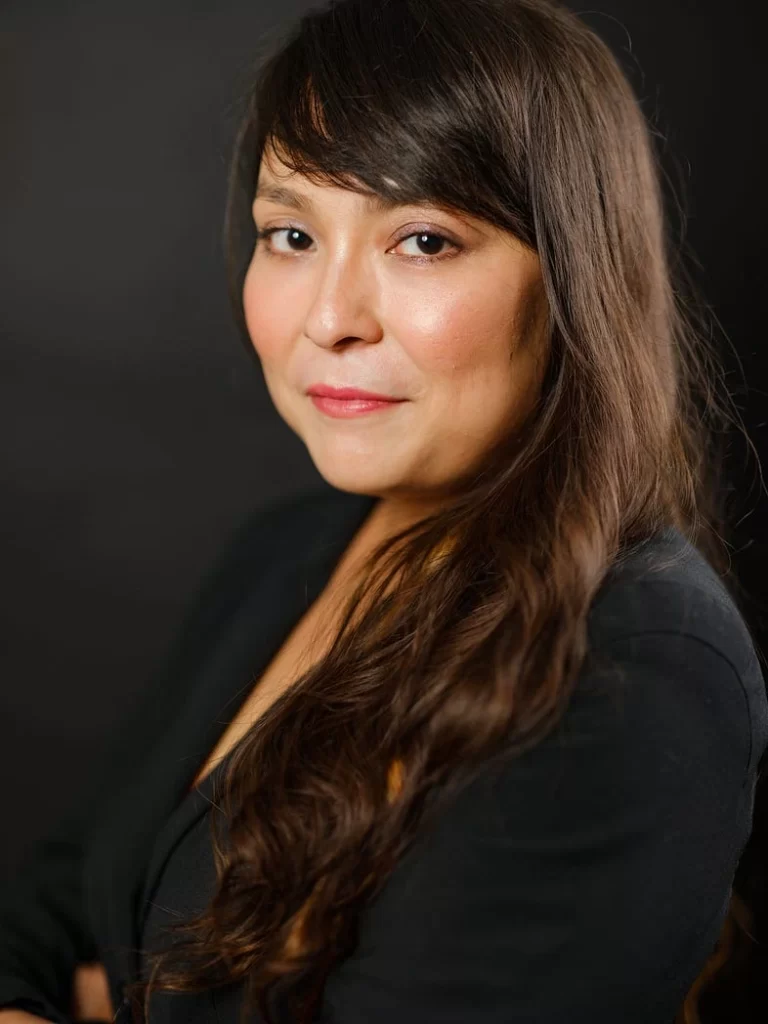
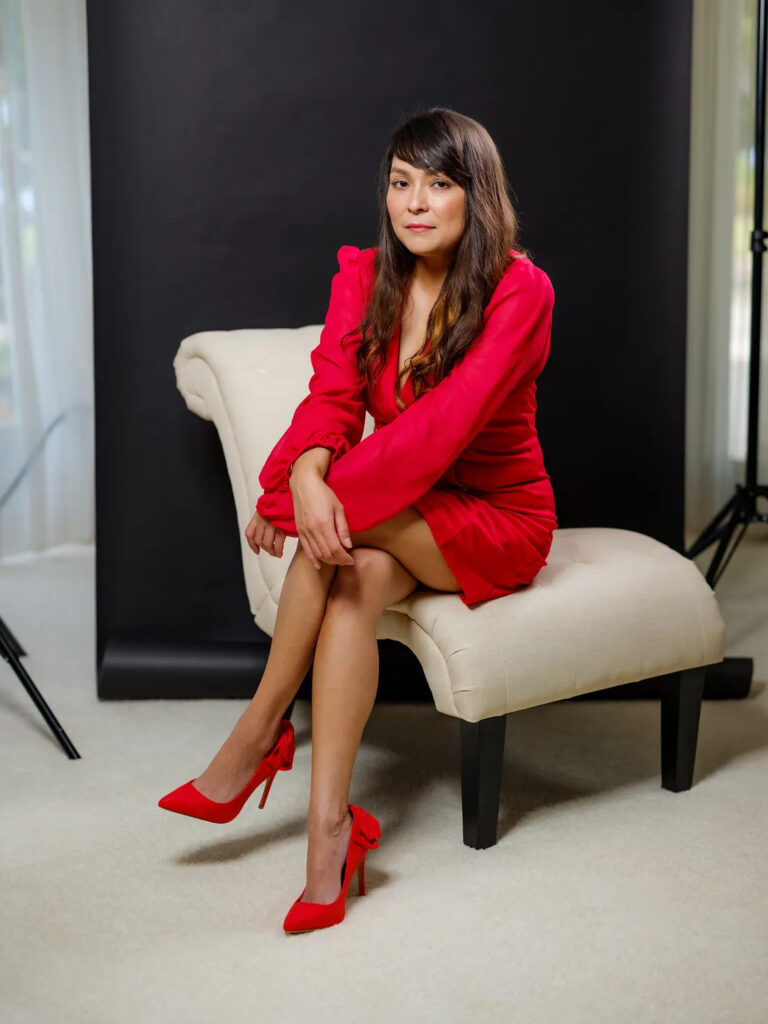
Rebecca Binny is an award-winning public relations strategist, breast cancer and domestic violence survivor, and a fierce advocate for women and minorities navigating male-dominated industries. With a Master’s in Communication Management from USC, she has dedicated her career to helping underrepresented voices thrive through strategic visibility and inclusive leadership. As a speaker, advisor, and entrepreneur, Rebecca continues to champion equity in both corporate and nonprofit spaces.
Thank you so much for doing this with us! Before we dig in, our readers would like to get to know you a bit more. Can you tell us a bit about your childhood “backstory”?
Igrew up in Singapore, a conservative Asian country smaller than the size of Los Angeles County. I’m from a mixed raced heritage, my father being Portuguese, Dutch, Burmese, and several other things. My mother is Chinese (not the kind straight from China but Singaporean Chinese). My parents got divorced before I reached high school and I moved to the United States at a tender age right after graduation at 22. I was ambitious despite my family background and abuse as a child. I knew one day I could make a difference.
I have firsthand witnessed and experienced inequality and adversity from a young age. Being a woman, being young (in a male dominated entertainment industry then), being Asian and mixed race, being an immigrant, a transplant to a new country of a totally different culture… later on being a single mother, domestic violence survivor. In 2024, I was diagnosed with breast cancer. Today I’m in remission after 4 surgeries and less than a year in recovery.
I donate over 65% of my income to philanthropic causes. Those early experiences shaped my deep sense of justice and my commitment to lifting others up, especially women and marginalized voices.
Can you tell us the story about what led you to this particular career path?
My path to public relations wasn’t linear. After surviving both breast cancer and domestic violence, I realized the power of stories — how they can heal, inform, and even liberate. I wanted to help others, especially women and minorities, tell their stories in ways that could open doors and shift narratives, which is exactly what PR allows me to do.
Can you share the most interesting story that happened to you since you began your career?
One of the most unexpected moments in my career was being recognized by PR NEWS as an Industry Innovator. It wasn’t just about the award — it was about being acknowledged in a space that doesn’t always see or center people who look like me or have my story. That recognition became a platform I now use to advocate for others.
Another interesting story was how, by God’s Grace, my life has been turned around time and again with each adversity or setback. I’ve become friends with those I’ve worked with and advocated for.
You are a successful business leader. Which three character traits do you think were most instrumental to your success? Can you please share a story or example for each?
Resilience has been my cornerstone — I faced cancer and domestic violence and still showed up, built multiple businesses, and earned industry accolades. I fight for those who don’t have a voice, in the hope that my voice will bring justice, equality, and in many cases, a chance to be heard, for those who can’t seem to find their own voices.
Empathy is another — I’ve worked with nonprofits supporting marginalized communities, and I approach each campaign and client with a deep understanding of their realities. A woman’s heart and voice is truly vital in leading a business among the men.
Strategic thinking has helped me stand out — once, I helped a nonprofit increase visibility nationally with just a fraction of the budget that larger firms required, by leveraging creative media tactics and fresh story-telling tactics.
Ok, thank you for that. Let’s now jump to the primary focus of our interview. Can you help articulate a few of the biggest obstacles or challenges you’ve had to overcome while working in a male-dominated industry?
The biggest challenge has been being heard. In boardrooms or strategy sessions, I’ve often had to assert my expertise more than male counterparts. There were also moments where my advocacy for diversity was brushed off as “too niche,” even though it directly impacts company performance and morale.
Since I also ventured out at a young age, I not only had to face a male dominated industry in the entertainment realm, I also had to fight stereotypes of being Asian and young! If you think being female alone was tough! Try coming up against the older white male!
Can you share a few of the things you have done to gain acceptance among your male peers and the general work community? What did your female co-workers do? Can you share some stories or examples?
I focus on bringing undeniable value to the table. For example, when I led a campaign that doubled a client’s media coverage within a quarter, it earned respect across the board. I studied everything and anything, constantly reading and researching, to make sure that I knew what I was talking about. I wanted to be seen as intellectual (as opposed to just a young girl). Yet I wanted to be myself. I learned to find myself and could continue expressing myself through tasteful style while still maintaining a professional and confident side, so I did not have to come across as boring or less-feminine just to fit in. I was always able to back my point up and never was petty over any criticism.
Female peers and I also created informal networks — mentoring, sharing contacts, and quietly building each other up in rooms that weren’t built for us. I had support from older women who had faith in me and that’s exactly what I do for others today.
What do you think male-oriented organizations can do to enhance their recruiting efforts to attract more women?
They need to go beyond check-the-box diversity. That means investing in mentorship programs, ensuring women are represented in leadership, and offering flexibility for working moms. Most importantly, they should actively listen to women and implement structural changes based on that feedback.
Ok thank you for all of that. Here is the main question of our interview. Based on your opinion and experience, what are the “Five Things You Need To Thrive and Succeed as a Woman In a Male-Dominated Industry?” (Please share a story or example for each.)
Self-belief — If you don’t believe in your voice, no one else will. I remember pitching a bold campaign idea that got initially dismissed — but I stood by it, and it became a case study in earned media success.
Mentorship — I’ve grown because others poured into me. I now do the same for younger women navigating this field. Resilience — There will be closed doors and condescending stares. I keep showing up.
Strategic Communication — Knowing how to position your ideas and value is everything. That’s why I got into PR. Community — Surround yourself with people who get it. My tribe of women professionals has been my anchor.
If you had a close woman friend who came to you with a choice of entering a field that is male-dominated or female-dominated, what would you advise her? Would you advise a woman friend to start a career in a field or industry that’s traditionally been mostly men? Can you explain what you mean?
Absolutely — I would encourage her to go for it. Male-dominated fields need the brilliance and perspective women bring. But I’d also advise her to find mentors, know her value, and be ready to challenge norms — because change doesn’t happen unless we walk into those rooms. Women should dare to break norms and glass ceilings. Any company with good leadership should know that hiring is based on merit and capabilities, not gender and sexual orientation.
Have you seen things change for women working in male-dominated industries, over the past ten years? How do you anticipate that it might improve in the future? Can you please explain what you mean?
Yes, I’ve definitely seen progress — more women in leadership, greater awareness of equity issues, and more public conversations around inclusion. Ten years ago, conversations about workplace bias or the glass ceiling were quieter, sometimes even discouraged. Today, we’re not only naming the issues but actively pushing for change. Looking ahead, I believe we’ll see more systemic accountability — things like transparent pay practices, inclusive hiring pipelines, and better support for working mothers. But the real change will come when these initiatives are no longer “initiatives” — they’re just the way things are done.
We are very blessed that some very prominent names in Business, VC funding, Sports, and Entertainment read this column. Is there a person in the world, or in the US with whom you would love to have a private breakfast or lunch with, and why? He or she might just see this if we tag them.
I’d love to have breakfast with Mellody Hobson. Her leadership, grace, and unapologetic approach to advocating for diversity in business deeply inspire me. She has broken so many barriers while remaining committed to lifting others as she climbs — something I strive to do in my own work every day.
Thank you for these fantastic insights. We greatly appreciate the time you spent on this.
About The Interviewer: Kelly Reeves is a published writer, copy editor, speaker, and certified entrepreneurship and personal growth coach. She is passionate about working with entrepreneurs and executives over 50 to help them discover their life’s purpose, unlock their full potential, and thrive in the second half of life. As an award-winning public relations professional with multi-industry knowledge Kelly worked with global brands, startups and media personalities including the Tony Hawk Foundation, Barrett-Jackson, Targus, Kingston, WD, and Howard Stern. Kelly successfully launched a variety of consumer electronics and B2B brands and executed highly successful PR and social media campaigns. With an average track record of generating more than 50 million media impressions on a monthly basis, she placed clients in leading media outlets such as InStyle, the Wall Street Journal, USA Today, CNet, TechCrunch, AllThingsD and Mashable; and landed spots on high profile programs such as Extra, the Today Show, ABC News, CNN and Good Morning America. She also played an integral role in helping clients increase sales revenue by over 350%. Her community service includes mentoring students in the Masters of Entrepreneurship Program at the Paul Merage School of Business at the University of California, Irvine. She also mentors students in the College of Communications at California State University, Fullerton. Kelly serves as the Co-Founder and President of Paw Prints in the Sand Animal Rescue, a 501c3 animal welfare organization where she oversees the operations, donor relations, and marketing and PR strategy.